
How to Pack for a Business Trip

How to pack for a business trip is about arriving with everything ready to go - no ironing, no scrambling through a pile of rolled clothes for a charger, no overhead-bin anxiety.
The difference between a good packer and everyone else is a good system.
What we have found after years of designing bags for business travelers is that the people who travel well do three things:
- They pack by their calendar
- They choose bags that work as a coordinated system
- They have a 15-minute hotel arrival routine that makes wrinkles irrelevant.
Nearly 70% of Americans say packing is one of the most stressful parts of travel (Source: OfferUp, 2021) - but most of that stress comes from not having a method, not from the packing itself.
This guide covers all three. Whether you are heading out for an overnight client meeting or a five-day conference, the method scales.
Start With Your Schedule, Not Your Suitcase

Before you open a bag, open your calendar. Every meeting, dinner and transit window tells you exactly what to pack - and more importantly, what to leave behind.
Ask yourself three questions:
- How many outfit resets do I actually need? A two-day trip with back-to-back meetings might only need one suit and two shirts. A four-day conference with a dinner event might need three distinct looks. Count the events, not the days.
- Will I have time to steam or press anything? If you land at 8 p.m. and your first meeting is at 8 a.m., plan for zero wrinkle recovery time. That one detail changes how you pack the suit entirely.
- What is the dress code range? A client-facing pitch and an internal strategy session have very different thresholds. Pack for the most formal event, dress down for the rest.
Most people pack by instinct ("I might need this") instead of by schedule ("I will need this on Wednesday afternoon"). The difference is usually 30-40% less volume in the bag.
And the data backs it up: 40% of travelers come home with clothes they never wore (Source: Upgraded Points, 2024). That is dead weight you carried through security, up the jetbridge and into the overhead bin for nothing.
The Capsule Method: Build Outfits, Not Options

The fastest way to overpack is to think in individual items. Five shirts and three trousers sounds like 15 combinations. In practice, you wear the same two and carry the rest for a week without touching them.
Instead, build complete outfits tied to specific calendar slots:
| Slot | Outfit | Notes |
|---|---|---|
| Day 1 - Travel + evening dinner | Dark suit, white shirt, versatile tie | Wear the suit on the plane to save bag space |
| Day 2 - Client meetings | Navy trousers, light blue shirt, blazer | Blazer doubles for post-meeting drinks |
| Day 3 - Internal sessions + travel home | Chinos, polo or smart casual shirt | Comfortable for the return flight |
Three complete outfits. Everything coordinated. No decision fatigue at 6 a.m. in a dim hotel room.
Without pre-planned outfits, the average person spends 10-15 minutes each morning deciding what to wear (Source: Pantheon UK, 2025). Over a five-day trip, that is over an hour lost to staring into a suitcase.
The key constraint: every item should work with at least two outfits. Dark shoes that pair with the suit and the chinos. A belt that matches both. Neutral socks throughout. This overlap is what keeps the bag light without limiting your options.
Choose the Right Bags: The Two-Bag System

Here is the thing no one says out loud about business travel bags: the bag itself is half the system. A poorly designed bag makes even perfect packing fall apart at the overhead bin.
What we have learned from thousands of customer conversations is that the professionals who pack well use two bags that work together, not just two bags they happen to own.
Bag One: Your Main Bag
For business trips of 1-5 nights, this is either a garment duffel bag or a wheeled carry-on. The right choice depends on what you are carrying:
- Garment duffel: Best when you are traveling with suits or blazers. A dedicated garment compartment keeps structured pieces flat and separated from everything else. The suit goes in last and comes out first - which is exactly what you want on arrival. We compare options for this here.
- Wheeled carry-on: Better for longer trips (4-5 nights) or when the walk from gate to ground transport is long. Easier on your shoulder over distance, but less effective at protecting structured garments unless it has a built-in garment sleeve.
What matters most in either case is compartment architecture. We design bags with separate shoe compartments, garment sections and accessible toiletry pockets for a reason: they solve the one problem every business traveler knows. You are standing at the overhead bin with 150 people behind you, and the one thing you need is at the bottom of a single undivided cavity. Good compartment design means you reach in, grab what you need and sit down.
(We compare the options in more detail in our guide to business travel luggage here.)
Bag Two: Your Personal Item (Day Bag)

Your briefcase, laptop bag or backpack. This carries everything you need during the flight and in meetings - laptop, documents, chargers, passport.
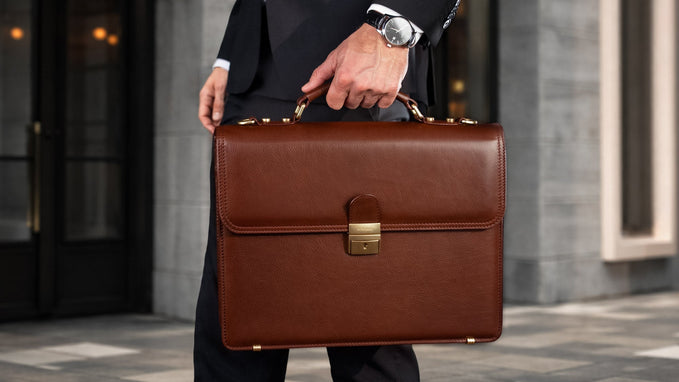
The personal item does double duty. During transit, it is your in-flight bag. On the ground, it is your daily work bag. Which means it needs to be something you would carry into a boardroom, not a nylon daypack with a carabiner dangling off it.
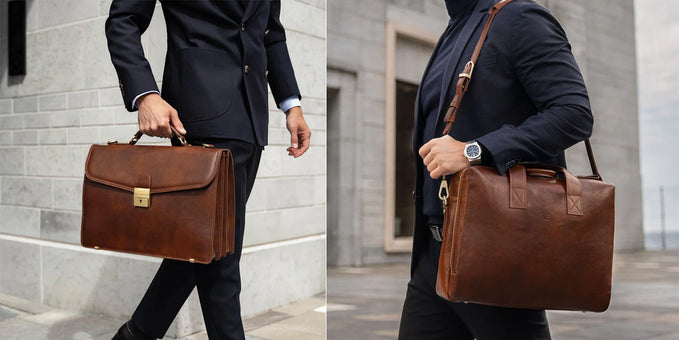
A common question we get is what makes a good travel briefcase different from an everyday one. Three things: a padded laptop sleeve that you can access without opening the main compartment, a luggage strap or sleeve that slides over a wheeled bag handle, and enough structure to stand upright under the seat without flopping over.
(If you are weighing up options, we have guides on travel briefcases here. For organising what goes inside, see how to organise your briefcase.)
Not sure about airline rules? We break down whether a garment bag counts as a personal item separately.
How to Pack Each Item Type

This is where most guides lose you. They say "roll your clothes" as if a wool suit and a cotton t-shirt behave the same way in a bag. They do not. Different materials need different handling.
Suits and Blazers
Three methods, ranked by wrinkle protection:
- Garment bag with a dedicated suit compartment - keeps the suit flat and separated. Best option by a clear margin. If you travel with suits regularly, this is the method that works every time.
- Inside-out fold - turn the jacket inside out so the lining faces out, fold at the shoulders, lay flat on top of everything else. The lining fabric is smoother and resists creasing better than the outer shell. A good backup when you do not have a garment bag.
- Wear it on the plane - the suit stays on your body, not in a bag. Remove the jacket before sitting and fold it neatly into the overhead bin or over the seat back. Best for short flights where you will go straight to a meeting.
We have seen it happen too many times: someone packs a suit between rolled jeans and a toiletry bag, arrives with deep creases across the lapels and has no time to fix it. In business, you have roughly 7 seconds to make a first impression, and 55% of that impression is visual (Source: Wave Connect, 2024). A creased suit undermines your credibility before you open your mouth.
Dress Shirts

Fold along existing seams, not against them. Button every button (including the collar) before folding - this holds the shape and prevents the collar from curling. Stack shirts in alternating directions (collar left, collar right) to distribute bulk evenly. A sheet of tissue paper between each shirt reduces friction between fabrics and genuinely prevents creases. It sounds fussy. It works.
Knitwear, T-Shirts and Casual Items
Roll these tightly. Rolling works for unstructured fabrics because it minimises fold lines and compresses well - you can fit roughly 30% more rolled items than folded items into the same space (Source: Palmer Clothing, 2025). Reserve rolling for knits, cotton tees, gym clothes and underwear. Never roll a dress shirt or anything with a structured collar.
Shoes
Pack shoes sole-to-sole along the bottom edge of your bag - they are heavy and should sit low to keep the bag balanced. Use dust bags or shoe bags to protect your clothes from the soles. For leather dress shoes, insert shoe trees or stuff the toe box with rolled socks. This takes 10 seconds and prevents the toe from collapsing in transit. If you have ever pulled a pair of dress shoes out of a bag to find the toe creased flat, you know why this matters.
Leather Goods

Leather belts, watch straps, portfolios and wallets need to be kept away from items that could scratch or compress them. Roll belts rather than folding them - folding creates a permanent crease in the leather over time, and once that crease is set, it does not come out.
Store leather accessories in a soft pouch or wrap them in a cotton shirt. Metal hardware on zippers, buckles and clasps is the most common cause of scratches on leather surfaces inside a bag.
Tech and Cables
Everything you need during the flight or at the gate goes in your personal item, not your main bag. Laptop, phone charger, portable battery, headphones - all in the bag that stays at your feet. A cable organiser pouch keeps things findable. The alternative is fishing through a tangle of cables at 5 a.m. while the person in the next seat watches you struggle.
The Packing Order (Last In, First Out)
Most people fill the bag in whatever order items come to hand. The suit ends up buried under gym clothes. The toiletry bag is wedged in a corner. Everything you need first is at the bottom.
Pack in reverse order of need:
- Bottom layer: Items you will not need until you fully unpack. Shoes (in bags, along the base), toiletry bag, pyjamas, gym clothes.
- Middle layer: Rolled casual items, underwear, socks. Packing cubes help here - one cube for socks and underwear, one for casual clothes. You can unpack an entire bag into hotel drawers in under 90 seconds with cubes.
- Top layer: Dress shirts and trousers, folded flat.
- Garment compartment or very top: Suit and blazer. Last thing in, first thing out. This matters because the first thing you do at the hotel is hang the suit - and having to excavate through the entire bag to reach it defeats the purpose of packing carefully in the first place.
Your 15-Minute Hotel Arrival Routine
The mistake we see most often is not in the packing - it is in the unpacking. People arrive, drop the bag in the corner and deal with it later. By "later" the suit has been compressed for three extra hours and the creases have set deeper.
Here is what works. Do it in this order:
- Hang the suit immediately. Open the garment compartment, hang the jacket and trousers. This is the single most important step. Most light packing creases release within 15-20 minutes of hanging on a proper hanger.
- Turn the bathroom into a steam room. Run the shower on hot with the bathroom door closed. Hang the suit and dress shirts near (not in) the steam. The moisture relaxes fabric fibres and pulls out creases without an iron. 15 minutes is usually enough for everything short of a hard fold line.
- Unpack into drawers. If you are staying more than one night, unpack everything. Living out of a suitcase creates new wrinkles and costs you 5-10 minutes every morning searching for things you already own.
- Set up your meeting prep station. Lay out tomorrow's outfit on the desk chair or spare hanger. Chargers on the bedside table. Briefcase by the door with documents inside. You should be able to grab it and walk out in the morning without thinking.
- Check your shoes. A quick wipe with a damp cloth removes travel dust. If you packed leather dress shoes, remove the shoe trees and let the leather breathe overnight.
This takes 15 minutes. It saves you 30 minutes of scrambling the next morning and protects the one thing you cannot recover from on a business trip: a poor first impression.
The Business Trip Packing Checklist
Clothing
- Suit or blazer (in garment compartment)
- Dress shirts (one per day, plus one spare)
- Trousers or skirt (two pairs covers most trips)
- Ties or scarves (if the dress code requires them)
- Underwear (one per day, plus one spare)
- Socks (one per day, dark colours that match everything)
- Dress shoes (worn or packed with shoe trees)
- Belt
- Pyjamas
- Gym clothes (only if you will genuinely use the hotel gym - be honest)
- Light sweater or cardigan (planes and conference rooms run cold)
Tech
- Laptop and charger
- Phone and charger
- Universal power adapter (for international trips)
- Portable battery pack
- Noise-cancelling headphones
- Cable organiser pouch
Documents and Essentials

- Passport or ID
- Business cards
- Boarding passes (digital, with a printed backup)
- Hotel confirmation
- Travel wallet with cards and local currency
- Pen (you will need one on the plane or at customs - more useful than you think)
Toiletries
- Travel-size toiletries (100 ml / 3.4 oz for carry-on compliance)
- Deodorant
- Razor or grooming essentials
- Toothbrush and toothpaste
- Medications
- Stain remover pen
- Shoe shine wipe
Need a toiletry bag? Check out the Superior
Often Forgotten
- Cufflinks or watch
- Glasses, contact lenses and solution
- Compact umbrella
- Reusable water bottle (empty through security, fill at the gate)
- Snacks for the flight
Common Packing Mistakes to Avoid
- Packing "just in case" items. If you cannot name the exact day and event you will wear something, leave it behind. Four in ten travelers come home with clothes they never wore (Source: Upgraded Points, 2024). That is not preparation. That is guessing.
- Burying the suit under everything else. The suit should be the last thing in and the first thing out. If you have to dig through your entire bag to reach it, the wrinkles have already won.
- Checking your only bag on a connecting flight. Transfer flights are responsible for 41% of all baggage mishandling globally (Source: SITA, 2024). If your trip involves connections, carry on. Your suit arriving a day late is not an inconvenience - it is a missed meeting.
- Forgetting the charger in the hotel room. Keep a dedicated travel charger in your bag permanently between trips. Do not rely on remembering to pack one from your desk. The charger that lives in the bag cannot be forgotten.
- Packing your bag to 100% capacity outbound. Business trips generate things - printed materials, client gifts, receipts, the jacket you bought because your hotel room was colder than expected. Leave 20% of your bag empty on the way out.
FAQ
What is the 5-4-3-2-1 packing rule?
Pack 5 tops, 4 bottoms, 3 accessories, 2 pairs of shoes and 1 hat or jacket. It is a general-purpose formula designed for leisure travel. For business trips, modify it: 3-4 shirts, 2 pairs of trousers, 1 suit, 1-2 ties, 1 pair of dress shoes (worn). Business packing needs a tighter formula because the dress code is less flexible and every item has to justify its bag space.
What is the 3-3-3 packing rule?
Three bottoms, three tops, three accessories. It is designed for minimalist travel and works well for a 3-day business trip: two dress shirts and one casual top, one pair of trousers and one suit (the suit counts as both a top and a bottom), plus a tie, belt and watch as your three accessories.
How many suits do I need for a 5-day business trip?
Two. Rotate them on alternate days - this lets each suit air out and recover from wrinkles naturally between wears. Dark navy and charcoal grey are the most versatile combination because they pair with almost any shirt colour. Wear one on the plane, pack the other in the garment compartment.
Can I do a business trip with just one bag?
For an overnight or two-night trip with one formal event, yes. A garment duffel with a built-in suit compartment can handle 24-48 hours comfortably. For anything longer with multiple formal dress requirements, two bags is the realistic answer. You can force more into one bag, but you will compromise on wrinkle protection or same-day access to essentials - and those compromises show up in exactly the moments that matter most.
Should I check a bag or carry on?
Carry on wherever possible. In 2024, roughly 1 in 160 checked bags was mishandled globally - a rate of 6.3 per 1,000 passengers (Source: SITA Baggage IT Insights, 2024). That rate climbs on international routes and connecting flights. A carry-on eliminates the risk entirely and saves you 20-40 minutes at baggage claim. US airline passengers paid $7.27 billion in checked bag fees in 2024 alone (Source: Bureau of Transportation Statistics, 2024). The only scenario where checking makes sense is a trip longer than 5 days with multiple formal events requiring more than two suits. (We break down the full carry-on vs. personal item rules here.)
Is a travel steamer worth packing?
For frequent travelers, a compact steamer (around 200 g) can justify the bag space. But test whether you actually use it before committing - most hotel rooms have an iron on request, and the bathroom steam method works well for light creases. If you travel more than once a month and your schedule rarely allows time for the steam shower method, a steamer earns its place. If not, skip it.
What should I do if my suit arrives wrinkled?
Hang it immediately. Run the hotel shower on hot with the door closed and hang the suit near the steam (not directly in the water). Most light creases release within 15-20 minutes. For deeper wrinkles, use the hotel iron on a low setting with a cotton cloth between the iron and the fabric. Never iron wool directly - the heat will leave a permanent shine on the surface.
How far in advance should I pack?
Plan your outfits 2-3 days before the trip. This gives you time to dry-clean, press or replace anything that is not ready. Pack the night before departure, not the morning of. Evening packing is calmer and catches gaps - 65% of travelers say not procrastinating on packing would have reduced their travel stress (Source: Expedia, 2024). Morning packing under time pressure is how chargers get left on bedside tables and suit jackets get hung on the back of a door instead of in the bag.
In our experience, the professionals who travel 30-plus flights a year all do one thing in common: they keep a permanent packing list and a pre-packed toiletry bag that lives in their luggage between trips. The system removes the thinking. And on a business trip, that is exactly what you want - one less thing to think about, so you can focus on the work that actually matters.
(If you are still deciding on the right bag, our guide to choosing the right travel bag for short trips walks through the decision in more detail.)

Author: Igor Monte
Igor Monte is the co-founder of Von Baer. He's an expert in all things premium leather, from being an end-user right up to the design and manufacturing process. His inside knowledge will help you choose the best leather product for you.
We strive for the highest editorial standards, and to only publish accurate information on our website.
Related Articles




Leave a Comment
Your email address will not be published.